Showing posts with label romance. Show all posts

Sunday, October 2, 2011

Review: Cleopatra's Moon - Vicky Alvear Shecter

Synopsis: Cleopatra Selene is the only daughter of the brilliant Queen Cleopatra of Egypt and General Marcus Antonius of Rome. She's grown up with jewels on her arms, servants at her feet, and all the pleasures of a palace at her command, and she wants only to follow in her mother's footsteps and become a great and powerful queen. Then the Roman ruler Octavianus, who has always wanted Egypt's wealth, launches a war that destroys all Selene has ever known. Taken to live in Octavianus's palace in Rome, she vows to defeat him and reclaim her kingdom at all costs. Yet even as she gathers support for her return, Selene finds herself torn between two young men and two different paths to power.

Review: A beautifully-written tale, Cleopatra's Moon seemed to promise a stirring historical adventure of intrigue, power struggles, and murders in the night. And it had all of that - and more. It is the "more" part which bothered me. Looking on the surface, this book was good. Cleopatra Selene, though inept at practically all that she attempted, was not the worst heroine to have, and her brother Ptolemy absolutely adorable. The descriptions of Alexandria were rich and vivid - so much so that the Reader could almost feel the warm, spiced wind and the blessed cool of palm trees.

But then you look deeper - or, rather, you read further into the book. While the Author did a splendid job with research, there is a rather unnecessary scene that seems to only serve the purpose of painting the Jews as, well, idiots who cannot even explain the depth of their beliefs (which is just ridiculous). They do not think like the Jews of the Ancient world, but like modern-day Evangelicals. It's painfully obvious that the Author spent more time looking up the Egyptian religion than Jewish beliefs, and I have to wonder why she even bothered putting the scene in at all.

Finally, there is the fact that the Author actually portrays the Romans too accurately. Yes, I am really voicing this as a complaint, and here is why: as I said, she portrays the Romans for what they were - a disgusting, perverted culture, whose economy was based solely on conquest. She also does a fairly good job of portraying the Egyptians the same way, but still manages to glorify them by picturing Cleopatra, Marc Antony, and Julius Caesar as being "not that bad of people." Where she got that Julius Caesar was kind and merciful to his enemies, I will never know, because any small reading of historical accounts written by Ancient historians will reveal that Julius Caesar was one of the most disgusting individuals that ever lived.

Putting that "minor" flaw aside, let us return to her portrayal of the Romans. This is where the sexual content comes into play. I will say this: the Author never becomes explicit, but she doesn't soften it either. Twice Cleopatra Selene is almost raped, there are numerous references to whores, men liking young boys (or other men), too-close-to-explicit-for-comfort groping and kissing scenes (again, no one wants to read descriptions of French kissing), and then finally, we do have a bedroom scene which I did not fully read, but it looked close enough to explicit to be absolutely inappropriate (ch. 44, pg. 315-316). But surely this is nothing to be irritated over, because it's an "interrupted bedroom scene," so that makes it okay (I am being sarcastic, by the way).

I realize that it is very hard to write a historical story containing Romans without mentioning their pervertedness, but it can be done tastefully, and even ignored to an extent. Rosemary Sutcliff managed to write tons of Roman-based books and never once found it necessary to delve as deeply into their disgusting habits as Vicky Shecter did.

In the end, we are left with a story that could have been excellent - well worth spending $18.00 on, in fact. But it's so populated with sexuality and immoral behavior (which, by the way, isn't necessarily painted as a bad thing; when Cleopatra Selene thinks her twin brother has a male lover, she thinks it's cute) that it makes it uncomfortable and practically impossible to read. I wish I had better things to say, but that is how it is.
Overall Rating: 
N

Friday, September 23, 2011

Review: The Near Witch - Victoria Schwab

Synopsis: "The Near Witch is only an old story told to frighten children. If the wind calls at night, you must not listen. The wind is lonely, and always looking for company. There are no strangers in the town of Near."

These are the truths that Lexi has heard all her life. But when an actual stranger - a boy who seems to fade like smoke - appears outside her home on the moor at night, she knows that at least one of these sayings is no longer true. The next night, the children of Near start disappearing from their beds, and the mysterious boy falls under suspicion.


As the hunt for the children intensifies, so does Lexi's need to know - about the witch that just might be more than a bedtime story, about the wind that seems to speak through the walls at night, and about the history of this nameless boy.

Review: I don't know if this is considered a "paranormal romance," but if it is, it is one of the best I have ever read. The Near Witch uses a technique which I really like: the village of Near feels very isolated, while at the same time not giving the entire impression that it is totally cut off from the rest of the world, yet cut off enough that the strange occurrences aren't out of place. And the Author never says whether or not Near exists on Earth, or somewhere else, adding on to the eerie, unreal feel. It was dreamlike, and parts of it echoed the Gothic elements of Wuthering Heights, even though the two stories are completely different.

The characters are, for the most part, good. I quickly became attached to the silent, mysterious, sad Cole (the strange boy). The Author brought out his personality in every aspect of his appearance and behavior: his clothes, pale and thin figure, and how very little he talks. These small things really brought depth to him. Lexi, too, is a very strong-minded, resourceful girl (and my Readers know how much I like those) who, despite her hatred for female pastimes, manages not to have The Attitude or get on one's nerves - at least, not always. The Author also does a good job of making certain characters really easy to hate, which is actually a great many; there is not a large number of helpful characters.

Now we come to the writing. I normally do not like first-person present-tense, but it somehow worked exceptionally well for this particular story. The writing is elegant and pleasing, as well as thoroughly eerie and frightening at times. The Author captures the nature of wind - its sounds and touch - in an uncanny manner, reminding me once more what it felt like to lie in my bed some cold winter night when I was very little, listening to the breeze's beckoning call. At times, things grow a little strange (especially at the end), and it was a strangeness that, had it been in any other book, I would not have liked. However, it worked quite well in The Near Witch.

My only real complaint was the romance between Lexi and Cole. It was not nauseating, nor did it lead to inappropriate scenes. But a romantic involvement did not seem to suit Cole's character. There are those characters who are meant to fall in love, and those who are not. Cole did not strike me as the type of character who was supposed to fall in love, and I was sorry that it happened. And while I liked the ending of the book well enough, I had another ending in my head which, had it happened, would have pushed this book up into my Top 10 list - easily. However, the Author was clearly not like-minded when it comes to killing characters, and I am content to accept her decision not to.


The Near Witch is a perfect book for some late, winter night, when the wind is howling outside of your window, and you sit curled up under a pile of blankets in a chair or bed, a cup of hot chocolate at hand and a candle or two. You will be reminded of what it was like as a child.


Overall Rating: {{{{

Saturday, September 17, 2011

Review: The Diamond Secret - Suzanne Weyn

Synopsis: Nadya is a mischievous kitchen girl in a Russian tavern. Having nearly drowned in the Iset River during the turmoil of the Bolshevik Revolution, she has no memory of her past and longs for the life she cannot remember. Then two young men arrive at the tavern and announce that Nadya's long-lost grandmother has sent them to find her. Yearning for family and friendship, she agrees to accompany them to Paris for the joyful reunion. Nadya eagerly embarks on her journey, never dreaming it will be one of laughter, love - and betrayal.

Review: I am a great fan of the theories surrounding Anastasia's survival (even if modern historians insist that it was impossible for her to have survived), and The Diamond Secret presents a new and thoroughly interesting version of this "what if" scenario. It is, of course, a predictable story, but still enjoyable, and the ending had a small, surprising element that I was not entirely expecting.

Nadya is a very likable heroine, at times slightly annoying, but no one is perfect, and the two young men equally good, though sometimes the "leading man" was aggravating and I had a hard time entirely understanding why Nadya liked him.

Some of the dialogue feels off, but the writing style, as a whole, is pleasing and contains just the right amount of descriptiveness; Readers will be swept away by the beautiful imagery. The Diamond Secret is just as enjoyable as all other installments in this series.

Overall Rating: 
JJJ

Others in the Once Upon A Time Series:
The Storyteller's Daughter (Cameron Dokey)
Beauty Sleep (Cameron Dokey)
Snow (Tracy Lynn)
Midnight Pearls (Debbie Viguie)
Scarlet Moon (Debbie Viguie)
Sunlight and Shadow (Cameron Dokey)
Spirited (Nancy Holder)
The Night Dance (Suzanne Weyn)
Golden (Cameron Dokey)
Water Song (Suzanne Weyn)
Before Midnight (Cameron Dokey)
The Rose Bride (Nancy Holder)
The Crimson Thread (Suzanne Weyn)
Belle (Cameron Dokey)
Wild Orchid (Cameron Dokey)
The Diamond Secret (Suzanne Weyn)
Winter's Child (Cameron Dokey)
Violet Eyes (Debbie Viguie)
The World Above (Cameron Dokey)

Friday, September 2, 2011

Review: Timeless - Alexandra Monir

Synopsis: When tragedy strikes Michele Windsor's family, she is forced to move from Los Angeles to New York City to live with the wealthy, aristocratic grandparents she has never met. In their historic Fifth Avenue mansion, filled with a century's worth of family secrets, Michele discovers the biggest family secret of all - an ancestor's diary that, amazingly, has the power to send her back in time to 1910, the year it was written. There, at a glamorous high-society masquerade ball, Michele meets the young man with striking blue eyes who has haunted her dreams all her life. And she finds herself falling for him, and into an otherworldly romance.

Soon Michele is leading a double life, struggling to balance her contemporary high school world with her escapes into the past. But when she stumbles upon a terrible discovery, she is propelled on a race through history to save the boy she loves - and to complete a quest that will determine their fate.

Review: There is not much to be said about this book, negative or positive. The writing is pretty, Michele is actually a fairly likable girl who isn't entirely scornful of history and the fancy life, Philip is a decent young man who did somehow manage to get on my nerves nonetheless after a time, the time traveling lends an interesting and mysterious element to the otherwise invisible storyline, and there is no inappropriate content beyond lots of kissing. For a "paranormal" or "otherworldy" romance story, Timeless isn't too bad. It did not make me scream and I was not inclined to vomit every five seconds, though I confess that after a while, it really started to get a Twilightish feel to it, and by the time I was done reading it, I wanted to watch a really bloody movie. However, because of the history aspect - which really was quite interesting - and the fact that there were no vampires, no werewolves, and Michele is way more tolerable than Bella, and Philip far, far easier to put up with than either Jacob or Edward (glare at me if you wish, Twihards; I'm being very gentle when it comes to addressing the horrors of Twilight), it wasn't nearly as difficult to stomach as that particular series, which I refuse to read entirely.

Timeless promises a sequel, which I am not particularly pleased about. It doesn't need a sequel. Why the Author could not just end it, I don't know, and unless she intends on stepping the storyline up (i.e. bringing it beyond the mushy-mushies and actually having some things happen), I can see the sequel being a disaster. I hope that it is not, but that is how I see things going.

Still, I enjoyed Timeless as much as I can enjoy a "otherworldly romance" book. The characters are, for the most part, likable, and the writing style is pleasing. Just don't expect too much to happen.


Overall Rating: 
KK

Others in This Series:
1)Timeless
2)Timekeeper

Saturday, August 27, 2011

Review: Anastasia's Secret - Susanne Dunlap

Synopsis: For Anastasia Romanov, life as the privileged daughter of Russia's last tsar is about to be torn apart by the bloodshed of revolution. Ousted from the imperial palace when the Bolsheviks seize control of the government, Anastasia and her family are exiled to Siberia. Yet even while the rebels debate the family's future with agonizing slowness, and while the threat to their lives grows more menacing, romance quietly blooms between Anastasia and Sasha, a sympathetic young guard she has known since childhood. But will the strength of a love that exists in secret be enough to save Anastasia from a tragic fate?

Review: I am having trouble, even now, after several weeks since reading this book, in formulating my thoughts about this story. On the one hand, it is very interesting - what book isn't, when it concerns Anastasia Romanov? But on the other hand, it was massively disappointing. The majority of the first half is good - Susanne Dunlap presents the Reader with her usual rich descriptions and complex characters. But I quickly became frustrated with Anastasia's lack of political knowledge (though this is probably not an entirely inaccurate portrayal), and Sasha, her love interest, goes from a pleasant sort of fellow to downright vexing. His contempt for Anastasia's ignorance and always calling her a child is irritating, because he does nothing to enlighten her on what is going on, and then getting mad at her when she expresses her ignorance.

Content quickly spirals downhill from there, when the Author begins to describe French kissing in pretty thorough detail, characters grope each other, and then there is finally a bed scene in Chapter 21, page 203. While it is not horribly detailed, it is suggestive enough of what is happening to make it wildly inappropriate, and I actually found it rather disrespectful towards Anastasia's memory to have her sleep with someone. Thankfully, however, the Reader can avoid the majority of these nasty details - skip the parts where Sasha and Anastasia meet up, and enjoy the rest of the book, because all other occurrences in the story are interesting.

It is unfortunate that the Author put in so much lustfulness; Anastasia's Secret could have been both a good wartime novel and a good love story, were it not so bogged down with physical pleasure. When I think back on this book, I can only think disappointing thoughts.


Overall Rating: 
KK

Thursday, August 11, 2011

Review: Ophelia - Lisa Klein

Synopsis: He is Hamlet, Prince of Denmark; she is simply Ophelia. If you think you know their story, think again.

In this re-imagining of Shakespeare's famous tragedy, it is Ophelia who takes center stage. A rowdy, motherless girl, she grows up at Elsinore Castle to become the queen's most trusted lady-in-waiting. Ambitious for knowledge and witty, as well as beautiful, Ophelia learns the ways of power in a court where nothing is as it seems. When she catches the attention of the captivating, dark-haired Prince Hamlet, their love blossoms in secret. But bloody deeds soon turn Denmark into a place of madness, and Ophelia's happiness is shattered. Ultimately she must choose between her love for Hamlet and her own life. In desperation, Ophelia devises a treacherous plan to escape from Elsinore forever . . . with one very dangerous secret.

Review: When I first read this book several years back, I didn't much like it because there are very few redeeming characters and quite a few sexual references. But I decided to give it a second chance, now that I am older and far more familiar with Hamlet, and more appreciative of the purposefully flawed characters therein.

My opinion has not changed drastically, but it has changed enough to make me keep it among my collection, rather than selling it as I had first intended. There are just as many sexual references as I recall, including two bedroom scenes, but the Author gracefully turns away from details and merely mentions that yes, they did it - let's move on, and she words it far more delicately than I did just then. Early on, a character pursues Ophelia with one intent only: to deprive her of virtue, but I assure you than nothing comes of it, and while the Author mentions a few more details than are necessary, she keeps even this to the smallest amount of words. Ophelia's going from childhood into womanhood (i.e. puberty) is mentioned with as much delicacy, and not dragged out into unnecessary details.

The majority of characters are flawed, but let us recall this Ophelia is based off of Shakespeare's Hamlet, which is all about flawed people, so when reading this book, one must take on the perspective that one does when reading the play: don't read it for the characters, but for the story. Even so, the Author manages to deliver some truly redeeming moments, when Ophelia realizes her errors and tries to amend them as best she can; when she determined to protect the life of her child; and finally, the Author presents us with Horatio, Hamlet's faithful friend, whom everyone will adore in the book. She plays upon all of his potential and really brings him to life.

Though I do rather wish Lisa Klein had toned down the sexual overtones, I have to admit that she handled them well nonetheless, and she offers us an ending far more redeeming and satisfactory than the ending of Hamlet. Had it not ended happily, where the villains and no-goods get the comeuppance and the good characters face their flaws and get on with life, I would have hated this book. But I would say that the ending alone makes it worth reading.

Overall Rating: 
JJJ

Saturday, August 6, 2011

Review: The Vespertine - Saundra Mitchell

Synopsis: The summer of 1889 is the one between childhood and womanhood for Amelia van den Broek - and thankfully, she's not spending it at home in rural Maine. She's been sent to Baltimore to stay with her stylish cousin, Zora, who will show her all the pleasures of city life and help her find a suitable man to marry.

With diversions ranging from archery in the park to dazzling balls and hints of forbidden romance, Victorian Baltimore is more exciting than Amelia imagined. But her gaiety is interrupted by disturbing, dreamlike visions she has only at sunset - visions that offer glimpses of the future. Soon, friends and strangers alike call on Amelia to hear her prophecies. Newly dubbed "Maine's Own Mystic," Amelia is suddenly quite in demand.

However, her attraction to Nathaniel, an artist who is decidedly outside of Zora's circle, threatens the new life Amelia is building in Baltimore. This enigmatic young man is keeping secrets of his own - still, Amelia finds herself irrepressibly drawn to him. And while she has no trouble seeing the futures of others, she cannot predict whether Nathaniel will remain in hers.


When one of her darkest visions comes to pass, Amelia's world is thrown into chaos. And those around her begin to wonder if she's not the seer of the dark portents, but the cause of them.

Review: The Vespertine is strange and a little hard to follow. This isn't because it is poorly written, because it isn't. The writing style is pretty and well-done, conjuring tasteful and beautiful pictures of dresses, scenery, and people. But with the visions and other otherworldly elements, it feels very surreal and dreamlike, and sometimes I was not certain that I read it correctly. It just barely worked for this particular story.

What surprised me most was how clean the story was. The entire time, from the very beginning to the very end, I expected someone to sleep with someone else (the main characters, mostly), but this never happens, and instead the Author just spends a lot of time describing Nathaniel and how his touch makes Amelia feel, which gets tiring in its own right, but it could have been worse. I admit that I hoped Nathaniel would end up being some creep with a villainous agenda of his own, because I found Nathaniel to be very disturbing and untrustworthy from the beginning, but as time wore on, I grew to like him a little bit more, though I was never fully supportive of his and Amelia's love. It reminded me far too much of the bizarre and rather wrong relationship of Cathy and Heathcliffe in Wuthering Heights. However, I believe that the Author intended that, so I was able to accept it.

Overall, I found The Vespertine interesting, and I will probably buy it, though it is not at the top of my list. I liked the writing style enough to ignore the majority of the storyline. I would neither recommend nor dissuade someone from reading The Vespertine, but I would warn them that it doesn't have much of a storyline.

Overall Rating: 
JJJ

Others in This Trilogy:
1)The Vespertine
2)The Springsweet

Friday, August 5, 2011

Review: The Twin's Daughter - Lauren Baratz-Logsted

Synopsis: Lucy Sexton is stunned when a disheveled woman appears at the door one day . . . a woman who bears an uncanny resemblance to her own beautiful mother. The two women are identical twins, separated at birth and raised in dramatically different circumstances: one as a member of high society, the other in a workhouse. Lucy's mother quickly resolves to give her sister the kind of life that she had never known, and the transformation in Aunt Helen is remarkable. As time goes by, Lucy herself transforms into a young woman, falling in love with a childhood friend she was once sure she hated. But in what should be a happy household, something is very, very wrong. And as Aunt Helen and Lucy's mother become ever more indistinguishable, Lucy begins to suspect that her aunt's now familiar face may mask a chilling agenda.

Review: This story had a lot of potential for being one of the best stories of mistaken identity and revenge I have ever read. The Author keeps things moving very well from the very beginning, dropping hints to a future twist that the Reader will not forget. Lucy is a witty, but proper, narrator who won't allow her Readers to miss out on the action. But here is where the good factors end.

Enter Kit (Christopher) Tyler, the main young man. I was dubious about the romance in this story from the beginning - I always am, just to be on the safe side. But I liked Kit; he was a very nice, honest boy. So I didn't understand why Lucy was such a jerk to him. It's like the Author wanted to have the whole modern trend of "heroine thinks she hates hero, treats him like garbage, then falls in love with him," but was conscious halfway through that such behavior did not suit Lucy's personality at all (it was really out of place), so rather than just rewriting it, she decided that Lucy gets over her sauciness very quickly and becomes fast friends with Kit. All this does is make Lucy seem bipolar.

Things progress downhill rapidly from there. The Author continues to maintain the suspense, and I spent the whole time thinking, Any minute now, things are going to be unveiled. Well, things are unveiled all right - far more things than need be, and not the sort of things that I was expecting. Let us start with female puberty, shall we? I am not a great advocate for putting such private, though natural, details in a story. No female wants to read a detailed account of a character going through female changes, and no male should know about it - and they certainly shouldn't learn about it from a book. Sometimes such things must be touched upon, but the Author of The Twin's Daughter did more than just touch upon it, all the while attempting to write it in delicate words, but there comes a point where one goes into so much detail that no amount of polite phraseology is going to rescue it.

Next up is the sexual content. For the most part, this remains in the "reference only" category, where things are alluded to when talking about certain people, and that is about it, with the exception of kissing scenes that start to progress into a little too much intimate touching and "mysterious" noises emitting from bedrooms. But in Chapter 42, page 366-369 we have an actual bedroom scene that is not horribly explicit, but comes so close to being thus that it's a wonder the Author didn't go into full-fledged descriptions. The only positive thing I can say about this absolutely unnecessary - and very private - scene is that at least the characters were married. But that gave me very little comfort, because books just should not include such intimate scenes even between married couples. Some things need to be left behind doors and not shared with the public, even in fiction. Leave it to the Reader to conclude that marriage usually leads to the sort of wonderful love that produces children, and don't literally spell it out.

Finally, the twist is revealed - and it is not at all what I was expecting. And I don't mean that in a good way. It reminded me of a perfect plot for a soap opera, actually, and in the end the characters are either completely immoral or go through a complete change of personality as to leave the Reader feeling like the only thing they can side with is that poor houseplant in the corner which has had to witness everything right along with you.

The Twin's Daughter could have been so good, but in the end, it is just one big letdown with way too many intimate moments that no one should have to read.

Overall Rating: 
N

Thursday, August 4, 2011

Review: In the Shadow of the Lamp - Susanne Dunlap

Synopsis: It's 1854, and Molly would give anything to change her circumstances as a lowly servant in a posh London house. So when she hears of an opportunity to join Florence Nightingale and her nurses in the Crimea, the promise of a new start - and perhaps even adventure - is too tempting to pass up.

The work is grueling, the hospital conditions are deplorable, and Miss Nightingale proves to be a demanding leader. But before long, tending to sick and wounded British soldiers becomes more than just a mission of mercy; it becomes a mission of the heart when Molly finds that she's falling love with not one, but two young men. With the battle raging ever nearer, one of the men will fall victim to the great guns. Will it be the dashing young doctor who sees Molly as more than just one of Nightingale's nurses, or the foot soldier who has left everything behind and joined the army to be near to her?

Review: I was, at first, uncertain whether or not this would be a good story with the "duel romance" element thrown in for good measure. In my experience, such details are only irksome and end up making the Reader hate everyone, and finally attaching themselves to That Guy because said Reader is fed up with everyone else.

The romance isn't as annoying as I was anticipating, but it wasn't my favorite. For once, however, I actually had nothing against the two men Molly Fraser finds herself mixed up with - Will Parker and Dr. Maclean. They were fine. Will was honest and gentle and clearly cared for Molly deeply, while Dr. Maclean cared for his patients and tried to do his best at his job. And while, for the most part, I liked Molly as a heroine, her indecision between the two got a bit on my nerves. Though both good young men, the infatuation between her and Dr. Maclean seemed rather sudden, while the relationship between her and Will felt right, and there was something just slightly off about Dr. Maclean that had me totally rooting for Will Parker. I saw it so clearly that I wanted to scream at Molly (and quite nearly did, but was reading in a public area and thought that maybe it would scare a few people if I yelled at the book), and towards the end of the book, I started to think her as a bit selfish for pushing aside Will's affections so many times because she liked the "danger" feeling she got around Dr. Maclean rather than the "safe" she felt around her friend.

However, this does not get in the way of the overall good storyline too much, and if I were not inclined to like both Dr. Maclean and Will, as well as Molly, I would say that it didn't belong. But it does because all three really are likable characters, and the Author wraps up the "love struggle" neatly and satisfactorily (managing to make it sad, but happy at the same time) in the end.

The writing is good, though not spectacular (I mean this as a compliment. Few authors' writing styles are spectacular; good is a thing to be proud up in a world where hardly anyone can write anymore). The Author conveys clearly the nitty-gritty of the hospital in the Crimea and the gristliness of the work therein, but without unnecessary details. I was able to munch on a molasses cookie easily enough while reading some of the meatier bits without my stomach flipping. Her historical detail is rich and accurate, though she takes a few acceptable liberties. While I knew quite a bit more about Florence Nightingale and the Crimean War before reading In the Shadow of the Lamp than most people, I find myself far more curious about it now, and intend to do some deeper research.

This book comes very recommended.

Overall Rating: 
{{{{

Thursday, July 7, 2011

Review: Ruby Red - Kerstin Gier

Synopsis: Sixteen-year-old Gwen lives with her extended - and rather eccentric - family in an exclusive London neighborhood. In spite of her ancestors' peculiar history, she'd had a relatively normal life so far. The time traveling gene that runs like a secret thread through the female half of the family is supposed to have skipped over Gwen, so she hasn't been introduced to "the mysteries," and can spend her time hanging out with her best friend, Lesley, watching movies and talking about boys. It comes as an unwelcome surprise then when she starts taking sudden, uncontrolled leaps into the past. She's completely unprepared for time travel, not to mention all that comes with it: fancy clothes, archaic manners, a mysterious secret society, and Gideon, her time-traveling counterpart. He's obnoxious, a know-it-all, and possibly the best-looking guy she's seen in any century . . .
Review: When I read that last part of the synopsis, my hopes for Ruby Red completely crumbled. It'll be one of those books, I thought, as I placed it back on the shelf, automatically deciding that it wouldn't go on my To Read list. However, I ended up checking it out from the library later because it was a new book, and while I was certain I knew what sort it would be, I decided that it would at least give me some laughs and groans.

Well, it certainly made me laugh, but not because it was a bad book. Quite the opposite, in fact - I was very pleasantly surprised when I finished it today. The entire time I was reading it, I kept thinking, Just wait until Gideon is introduced, but my dread was never realized. Contrary to the book's synopsis and the exert that's included on the back, Ruby Red isn't one of those terribly annoying, I'm-going-to-act-like-I-hate-you-because-I-really-like-you teen stories. It's quite an intriguing - and yes, weird - time-travel book, and the characters, for the most part, are likable. Especially the ghost James, who I took an immediate liking to.

Gideon isn't properly described in the synopsis. He is rather a know-it-all and according to Gwyneth (who narrates the story), quite attractive, but he's not obnoxious in the usual sense of adolescent males - actually, I didn't find him obnoxious at all, - and his know-it-allism isn't as snotty and arrogantly presented as one might think. At first, Gideon is a bit of a jerk, but given the circumstances, one can understand his frustration - and he also happens to be more or less correct about Gwyneth. But Gideon quickly improves his attitude, and is really quite nice, and not the horrendously aggravating flirt that I was expecting.

Gwyneth makes for an amusing narrator, she handles her panic well, and really does try her best when thrust into these unforeseen circumstances, completely unprepared. At times I thought she overreacted to Gideon's teasing, but I excused her on the grounds that she was in shock and some of the time Gideon really was a little mean. She doesn't fawn over Gideon's good looks too much, but instead laments the fact that such an attractive young man is so uppity, and leaves it at that. Her friend Lesley wasn't as bad as I anticipated, either. Her "modern" personality was aggravating at times, but I would not have changed it, because it really made her character.

The writing itself was nothing glamorous, nor was it bad. It was pleasing, the only real complaint being that some of the dialogue - especially during stand-offs - was rather cliched and sounded as if it belonged in a movie, rather than a real historical setting. Nothing truly atrocious stood out, and I would say that the Author's writing is good for the sort of genre she's writing.

While certainly strange, the plotline is interesting and manages to be fairly original from all of the other time-travel books. I really do look forward to reading the next two installments.

Overall Rating: 
JJJ

Others in This Trilogy:
1)Ruby Red
2)Sapphire Blue

Sunday, June 12, 2011

Review: A Golden Web - Barbara Quick

Synopsis: Alessandra Gilianti is desperate to escape. Desperate to escape her stepmother, who's locked her away for a year; to escape the cloister that awaits her and the marriage plans that have been made for her; to escape the expectations that limit her and every other girl in fourteenth-century Italy. There's no tolerance in her quiet village for Alessandra and her keen intelligence and unconventional ideas.

In defiant pursuit of her dreams, Alessandra undertakes an audacious quest, her bravery equaled only by the dangers she faces. Disguised and alone in a city of spies and scholars, Alessandra will find a love she could not foresee - and an enduring fame as the world's first female anatomist.

The story of Alessandra Gilianti is widely debated among historians. There is no solid historical proof that she existed, but there are plenty of stories about her and where her remains can be found. Barbara Quick chose to write this story as if all these stories were true, and I like to believe that she did exist.

Review: After reading The False Princess, Alessandra was quite refreshing. Resourceful, intelligent, and willing to deal with situations as they come, she's an entirely likable heroine. And her brother, Nicco, is every bit as likable. The romance between her and Otto got a little bit on my nerves, but overall I did not mind it too much. It was more Alessandra's "young love" that I didn't particularly care for than anything else, but I would not change it if only because it was accurate. Otto's discovery of her true identity was quite enjoyable and very well done, making completely up for any slight vexation I felt earlier. Sexual references are a bit more numerous than I would have liked, but nothing ever actually happens, and the Author does not just completely saturate the story with such references like some authors like to do with stories set in fourteenth-century Italy.

The writing style itself is quite good. The Author paints beautiful pictures of fourteenth-century Bologna, but does not leave out how thoroughly unsanitary life was then, managing at the same time to not go into such disgusting detail that the Reader feels obliged to push aside their breakfast. I was particularly impressed with her dissection descriptions; they gave a clear picture of what was being examined without bogging the flow of the paragraph down.

A Golden Web will find a home on my shelves eventually.


Overall Rating: 
JJJ

Saturday, June 11, 2011

Review: The False Princess - Eilis O'Neal

Synopsis: Princess and heir to the throne of Thorvaldor, Nalia has led a privileged life at court. But everything changes when she learns, just after her sixteenth birthday, that she is a false princess, a stand-in for the real Nalia, who has been hidden away for her protection. Cast out with little more than the clothes on her back, the girl now called Sinda must leave behind the city, her best friend, Kiernan, and the only life she's ever known. Sent to live with her only surviving relative, Sinda proves inept at even the simplest tasks. Then she discovers that long-suppressed, dangerous magic runs through her veins, and she realizes that she will never learn to be just a simple village girl. Sinda returns to the city to seek answers. Instead, she rediscovers the boy who refused to forsake her, and uncovers a secret that could change the course of Thorvaldor's history forever.

Review: Oh dear. I thought I would have more positive things to say about this story when I started reading it yesterday. Sinda showed every sign of being a relatively good, resourceful heroine, and while city and people names were often painfully cliched fantasy names, I had hopes that it would be a fairly good fantasy/adventure story. There are only two things that made this story bearable: 1) it brought back a few fond memories of when, for a while, I tried playing The Elder Scrolls: Oblivion RPG computer game (I admit; there were aspects that were loads of fun), and 2) Kiernan and Philantha were likable characters.

If it hadn't mainly been for Kiernan, who I really did attach to quite quickly, and Philantha, who I attached to almost as quickly, I don't think I would have finished The False Princess. Sinda isn't the most annoying heroine I have encountered, but she came bloody well close to it. She isn't resourceful, her attitude grows increasingly worse, she's clumsy to such a degree that I have wonder why she even bothered to walk anywhere (it seems that ever since the Twilight Saga, clumsiness is a running theme amongst annoying heroines. Really, it's irritating and rather nauseating), she's useless and inept at everything (and while she claims that she is willing to learn, her bad attitude of feeling sorry for herself gets in the way), she is a complete jerk to Kiernan, and she spends far too much time trying to "discover" herself. The whale in The Hitchhiker's Guide to the Galaxy movie took less time in establishing his identity.

On top of this, the romance in it is positively adolescent and nauseating. Kiernan seems mature in his love and expresses himself well, but Sinda is just . . . Words really cannot express what I am trying to say. Were she a fourteen-year-old, perhaps I would cut her some slack. But she is well past sixteen, and on top of that, she is in love with a young man she's known her entire life!! Such silly "pantings of the heart" love only gets in the way of a good adventure. I am all for romance in stories, but not adolescent "my skin tingles at his every touch and look" romance.

The writing itself isn't terrible, but it is very modern, and the dialogue generously explores every possible solution and/or theory under the sun, just in case the Reader isn't capable of contemplating the possibilities themselves. We also have Sinda's personal thoughts to guide us poor, unimaginative Readers, telling us how we should feel about each character and what we should think of the situation. There is also too much focus on tiny little body movements, the most common being licking one's lips, which really got on my nerves; whenever I read it, my mind immediately focused alarmingly on the lip-licking, accompanied by the deafening sound of that horrible habit. My mind's eye saw the little flecks of dried, peeling skin on the character's lips, and I gazed with horror upon the bits of saliva now coating them.

Have I disgusted you enough now?

I doubt that I will buy The False Princess, and I would only encourage you to read it if you're seeking to be annoyed.

Overall Rating: 
KK

Tuesday, May 10, 2011

Review: Paradise Red - K. M. Grant

Warning: may contain spoilers

Synopsis: As winter falls upon the Occitan, Raimon carefully plans his attempt to recover the Blue Flame from the hands of the evil White Wolf. But Aimery's scheming could lead them all to the pyre - and Raimon might not be so lucky to escape from it again.
Meanwhile, Yolanda - unwillingly married to Sir Hugh des Arcis - is threatened by her husband's desire for a son. As Sir Hugh prepares to lay siege to the Cathar stronghold where the Flame burns, Yolanda flees his castle in a blizzard to find Raimon, a journey that could end in disaster. But could Raimon's passion for the Flame cause him to lose Yolanda and even himself?
Review: An excellent and fitting end to the Perfect Fire Trilogy. One cannot say that it's a happy one. Paradise Red, like the other two books in this trilogy, is based on actual historical events, and the taking over of the Occitan by the French king and the purging of the Cathars was not a bloodless occurrence. Have tissues on hand and definitely don't read Paradise Red when you're feeling depressed.
But that really isn't what makes this particular book so depressing, even though the mass burning in the end is certainly a hard part to read (especially if you are eating roasted chicken). I have never liked Raimon all that much. I've tolerated him and for the most part agreed with him, and I've always supported the attachment between him and Yolanda. But Raimon often acts far too selfishly, using people for his own gains, and Paradise Red is no exception. While I can understand what made him use Metta to get close to the White Wolf and the Flame, I couldn't accept it. Poor Metta; Raimon is almost her undoing. In White Heat, I felt sorry for Sir Hugh, but in this one, I hate him - even though he redeems himself a little bit in the end - but only a little, in my opinion. And even Yolanda makes decisions that had me despising her tremendously, but she does end up making the right decision in the end and I liked her again, though not as much as before.

I can't say that K. M. Grant could have written it any other way, though. There are very few characters to like in the finale, but none of their choices were out-of-character, and while Raimon never redeems himself enough in my view, he does realize that he did wrong and must repent. I can never find myself disliking K. M. Grant's decision to make her main characters less-than-spectacular; she manages to write "only human" heroes and heroines in a way that doesn't leave the Reader feeling disappointed in a bad way, and the characters do, in the end, always make the right decision, or see their faults and try to amend.

There must now be some words lent towards content. I am sorry to give anything away in this part, but I'll do my best not to give too much away. Sir Hugh, as it says in the summary, wants a boy, while Yolanda is quite adamant that it not happen - at least, not by her. As far as she's concerned, Sir Hugh has broken their marriage contract by burning her home in White Heat. Hugh does end up having his way with Yolanda, but the Author deals with this in the most delicate language. She doesn't even actually write the scene; it goes from Hugh's arrival at the manor to after he's done the deed and left again. This event is alluded to throughout the book, but always in the fewest words possible, and never in detail. So my Readers can be assured - if a scene seems that it is going in an undesirable road, don't worry - there are no details. K. M. Grant cuts it at the right moment.

I cannot say that Pardise Red was my favorite out of the trilogy, but it was a good ending. Bittersweet. As always, K. M. Grant's writing is truly wonderful and I look forward to any other books she intends to write in the future.

Overall Rating: 
{{{{
Others in the Perfect Fire Trilogy:
1)Blue Flame
2)White Heat
3)Paradise Red

Saturday, January 22, 2011

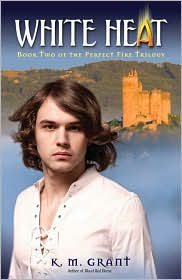
Review: White Heat - K. M. Grant

Synopsis: After escaping the pyre, Raimon has taken the Blue Flame with him into hiding deep within the mountains of the Occitan. Although he longs to follow Yolanda to Paris, where she has been sent to marry Sir Hugh, he must instead fulfill his duty of protecting the Blue Flame and save their beloved country from the advancing forces set on destroying it.

In Paris, Yolanda ignores Sir Hugh's attempts to win her heart, even though she believes Raimon is dead. But as his war train, backed by the French king, heads for the Occitan, she must find a new way to fight for both her country and her own future.


Review: Yes, I know - the cover is horrible, and those of you who know me are probably wondering why I read it. This is one of those cases where you cannot judge the book by its cover - it doesn't do the story justice at all. That said, let me move on to the book itself.

It has been a while since I have read the first book in the Perfect Fire Trilogy called Blue Flame, but even so the characters and events were all fresh enough in my mind to follow White Heat with ease. After all, Blue Flame had an ending that is bloody hard to forget. It took me a little while to get used to the idea once more that a country - the land Amouroix - is in fact the narrator of the story. I know how strange that must sound, but it isn't exactly a continuous narration. Every once in a while the Amorouoix pops smoothly in to reference itself in the first-person form, and then the rest feels like a third-person story. And yet somehow retains the feeling of a first-person narration. The style suits this trilogy perfectly.

It was easy to find characters to hate in Blue Flame. One of K. M. Grant's best writing talents - in my opinion - is being able to create characters that a Reader can so effectively hate. She did it with the De Granville Trilogy and How the Hangman Lost His Heart - if it can truly be said that there is an enemy in the latter. Never have I hated a character so much as the White Wolf - at least, it has been a long time since I have. And Sir Hugh I despised with almost equal violence. At least, in Blue Flame I did. But in White Heat, I couldn't help but feel a little sorry for Sir Hugh, and though I could certainly understand why Raimon hated him, I could also understand Yolanda's slight feeling of duty towards him. Normally I hate it when an Author takes an easy-to-hate character and transforms them into a pitiable, generally good-hearted person. Perhaps because it had been a while since I read Blue Flame that I found the transition so easy, or maybe even then I felt a little sorry for Sir Hugh. Either way, the transition worked.

White Heat's ending is not as climatic and breath-taking as Blue Flame's, but it is still very good, and I am glad that K. M. Grant did not attempt another ending like in the first installment. I look forward to reading Paradise Red. With former enemies now having to come together to protect the Flame and the Occitan, I believe that there will be some interesting occurrences.

Overall Rating: 
{{{{

Others in the Perfect Fire Trilogy:
1)Blue Flame
2)White Heat
3)Paradise Red

Sunday, January 16, 2011

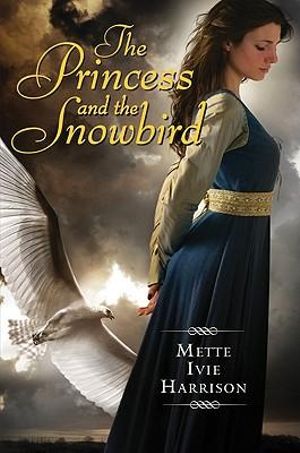
The Princess and the Snowbird Review (Mette Ivie Harrison)

Synopsis: Liva is the headstrong daughter of the hound and the bear, heiress to all her royal parents' magic and able to transform at will into any animal she wishes.
 
Jens is an outcast, a boy without magic, determined to make his way in the forest beholden to no one.

Though Liva and Jens are as different as night and day, from the time their paths first cross they are irresistibly drawn to one another. Each wrestles with demons: Liva with the responsibility that comes with the vast magic she's inherited, Jens with the haunting memories he's left behind. Separately, they keep a lookout for each other and for the immense snowbird whose appearances signify a dark event on the horizon.
 
When a terrible threat surfaces, Liva and Jens set out in an attempt to protect all they hold dear. Much is at stake - for while their failure could spell an end to all magic, their success could bring them together at last.

Review: Like The Princess and the Hound and The Princess and the Bear, this one was an intriguing story with strong, likable characters. Also like The Princess and the Bear, it isn't a stand-alone. It's not quite as necessary to read The Princess and the Bear first as it is to read The Princess and the Hound before The Princess and the Bear, but I would recommend it simply so you can understand some of the back-story that is referenced.

I liked Mette Ivie Harrison's writing style in this one better than the others. There were not as many choppy sentences and things flowed together better. However, The Princess and the Hound is still the superior story, and The Princess and the Bear an even better one than this sequel. The Princess and the Snowbird is shorter, and the storyline sometimes seems to ignore a lot of what occurred in its prequel. Also, a lot of it felt like a loosely-disguised barrage against "humans are destroying the wild; humans just take and never give back" themes. Honestly, such a theme should never be used in a book - especially adventures and romance; it always smacks of personal political opinions of the Author, and never should personal opinions influence a storyline so heavily.

Still, The Princess and the Snowbird was an enjoyable read, and I intend to buy it.

Star Rating: 3/5 (liked it)

Others in This Trilogy:

1)The Princess and the Hound
2)The Princess and the Bear
3)The Princess and the Snowbird

Saturday, January 8, 2011

The Princess and the Bear Review (Mette Ivie Harrison)

Synopsis: He was once a king, turned into a bear as punishment for his cruel and selfish desire. She was once a princess, now living in the form of a hound. Wary companions, they are sent - in human form - back to a time when magic went terribly astray. Together they must right the wrongs caused by this devastating power - if only they can find a way to trust each other. But even as each becomes aware of an ever-growing attraction, the stakes are rising and they must find a way to eliminate this evil force - or risk losing each other forever.

Review: People told me that you could read this one without reading The Princess and the Hound, but I don't recommend it. You won't entirely understand some of the things that are discussed, nor will you have a prior "connection" to the characters in it. This isn't a stand-alone sequel.

The Princess and the Bear is good, but not nearly as good as The Princess and the Hound. George is in it for a very brief moment, then never appears again, and Richon (the bear), while a good character in his own right, is not George. Just as Chala (the hound; her name changes from the prequel) is good, she isn't Beatrice, and I was not as fond of them - nor did I grow to be as fond of them - as I did with George and Beatrice.

Also, the story just wasn't as good. It was interesting and a pleasant surprise that Mette Ivie Harrison decided to write about what happens with the bear and the hound after the occurrences in The Princess and the Hound, but the story bordered far too much on being weird. A strange cat-man, unmagic killing everything in a weird plague-like way, time travel, and dead people rising (the latter isn't nearly as bad as it sounds, but it was still fairly weird). None of this beat George and Beatrice's story. I did find The Princess and the Bear a faster read than its prequel, but that is simply due to the shorter chapters. But the beginning almost made me stop because it was just strange. It jumps right into where Chala and Richon are still a bear and hound, and the Reader follows them around for a while in that form. I don't know why, but it was almost . . . uncomfortable reading those first few chapters. Perhaps it was the whole romantic attachment between a bear (who was human) and a hound - it was strange. And then a few things happen that just don't make sense and are all jumbled together. Finally, the story takes off when the wild man sends Chala and Richon back in time to save the kingdom from unmagic (don't ask me what that is; I don't know), and they gain human form. After that, the story is easier to read, but again - weird.

Despite my not liking The Princess and the Bear as much as The Princess and the Hound, I would recommend reading it if you have a desire to. Mette Ivie Harrison has one more book in this series - a series which I have dubbed The Animal Magic Trilogy - called The Princess and the Snowbird. According to her, it is a completely stand-alone book, but this one was supposed to be, too.

Star Rating: 3/5 (liked it)

Others in This Trilogy:
1)The Princess and the Hound
2)The Princess and the Bear
3)The Princess and the Snowbird

Saturday, December 4, 2010

Jane Review (April Lindner)

Forced to drop out of an esteemed East coast college after the sudden death of her parents, Jane Moore takes a nanny job at Thornfield Park, the estate of Nico Rathburn, a world-famous rock star on the brink of a huge comeback. Practical and independent, Jane reluctantly becomes entranced by her magnetic and brooding employer and finds herself in the midst of a forbidden romance.

But there's a mystery at Thornfield, and Jane's much-envied relationship with Nico is soon tested by an agonizing revelation from his past. Torn between her feelings for Nico and his fateful secret, Jane must decide: Does being true to herself mean giving up on true love?

This will be the first review I have written on a book that I have not finished. But I won't finish it - I don't need to. I dislike modern-set stories, but I was willing to try this one out because it was a contemporary version of the famous novel Jane Eyre, which I enjoyed. I was curious to see what April Lindner would do with it.

Four words: I was not impressed. While Jane Moore herself is, for the most part, a likable character and fairly close to Jane Eyre, Nico Rathburn is an entirely different story. I never liked Mr. Rochester from Jane Eyre, but my dislike for Nico Rathburn were for the simple reason that he was not at all like Mr. Rochester, and just basically annoying. However, the characters are the least disagreeable aspects of this book.

I got to Chapter 18 - so 209 pages into Jane. It is 365 pages long, 27 chapters. In that short span of words, I encountered 8 f-words and 5 s-words. I know there are few people who care about that, but I do, and for those of my Readers who are like-minded, you will understand my frustration and appreciate the warning. There was no need for the language - especially when the story is based off of Jane Eyre! But what made me close the book so firmly and set it on my "To Return To Library" shelf was the beginning of Chapter 18 - Jane and Nico sleep together. Whether they actually go through with this scene, I don't know, nor do I intend to find out. But what little I skimmed, it is explicit and it completely ruined the Author's claim of being a true Jane Eyre fan. No real fan of Charlotte Bronte's classic story would ever have Jane give into such immoral whims. In fact, in Jane Eyre, Jane outright refuses to live as Mr. Rochester's mistress.

So, for those of you who like Charlotte Bronte's Jane Eyre and were curious to read Jane - a contemporary version, - you will be disappointed. In modernizing it, April Lindner tainted the story with unnecessary language and sexual content that is completely out of the spirit of Jane Eyre.

Star Rating: 1/5 (didn't like it)

Tuesday, April 6, 2010

Climbing the Stairs Review (Padma Venkatraman)

Vidya is a fifteen-year-old Indian girl belonging to a non-traditional Brahamn family in WWII English-occupied India. She dreams of attending college and doing something grand with her life. But when her father is thrown into jail, she and her family must live with her traditional-minded grandfather. In his home, women do not go outside unveiled, they do not eat with the men, they live downstairs separately from the men, and they most certainly do not attend colleges.


In a desperate attempt to escape from her new, boring life - and her conniving aunt -, Vidya dares venture upstairs into the men's portion of the house and into her grandfather's library. It is there that she meets Raman - a young man who believes that women should be allowed the same freedoms as men.

Thus begins a secret friendship that blossoms into more, and when WWII strikes India hard, Vidya comes to realize that Raman may be the only one who can keep her from losing everything she cares about.

This book is a story about a strong young Indian girl living in one of the most perilous times in history, trying to break through the traditional view of a woman's role in life. She is discouraged about going to college when she finds herself surrounded by traditional-minded men and women, telling her that she must give up on her fantastical ideas and accept her role in life. But Raman offers her encouragement and support in her dreams, and with WWII affecting life in India, she comes to realize that she must not give up on her dreams of becoming a doctor.

With Padma Venkatraman's colorful and personal insight into Brahamn households, she offers a good comparison between the traditional and non-traditional forms of their living. Her well-developed characters makes it easy to fall in love with them and hate those who would obstruct their happiness. British-occupied India, and the looming threat of WWII, offers a colorful and interesting backdrop that leaves plenty of room for heart-pounding action, and the different viewpoints that are offered on the political struggles during that time make it a good book for group discussion. I certainly thoroughly enjoyed it.
Overall Rating: |||||