Showing posts with label historical fantasy. Show all posts

Monday, October 3, 2011

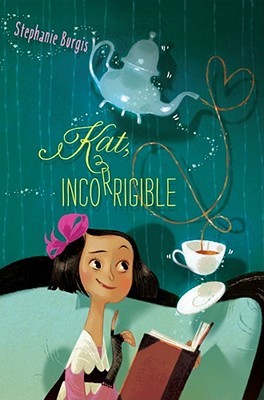
Review: Kat, Incorrigible - Stephanie Burgis

Synopsis: In the prim and proper world of nineteenth-century England, twelve-year-old Katherine Ann Stephenson is at a loss: Her sisters, Elissa and Angeline, have recently entered Society and now gossip incessantly in whispers; her foolish brother, Charles, has gambled the family deep into debt; and Stepmama wants nothing to do with them at all. What can Kat do but take matters into her own hands?

Luckily Kat has inherited her mother's magical talents and has the courage to use them - if she can only learn how. But with her sister Elissa's intended fiance, the sinister Sir Neville, showing a dangerous interest in Kat's magical potential, her sister Angeline creating romantic havoc with her own witchcraft, and a highwayman lurking in the forest, even Kat's reckless heroism will be tested to the utmost.
Review: From the very start of Kat, Incorrigible, I was absolutely taken with the witty writing style, the characters, and the situation. Kat is a wonderful heroine, whose age makes her attitude not seem like The Attitude, but rather the whims of a very young girl. She's full of spunk, intelligence, and a desire to protect her sisters - even if they are far too prim and proper at times, and always scolding her. Normally I do not like fantasy meddling with historical fiction, but Stephanie Burgis made it work, all the while retaining a Jane Austen-ish flavor to the entire setup.

At first, I expected Elissa and Angeline to be quite aggravating, but I soon found myself as dearly attached to them as I was to Kat, and their respective beaus equally amusing and endearing with their distinctive personalities. The villains are properly alarming, but they are not so scary that they detract from the overall humor of the story. When one has a story like this, which is light-hearted in the way that Jane Austen's works are light-hearted, one cannot have villains which give the Reader nightmares for weeks on end.
I cannot wait for the sequel to Kat, Incorrigible to come out; I am quite anxious to see what occurs when they go on a "relaxing" trip to Bath.

Overall Rating: 
|||||


Others in The Unladylike Adventures of Kat Stephenson Series:
1)Kat, Incorrigible
2)Renegade Magic
3)Stolen Magic

Saturday, August 6, 2011

Review: The Vespertine - Saundra Mitchell

Synopsis: The summer of 1889 is the one between childhood and womanhood for Amelia van den Broek - and thankfully, she's not spending it at home in rural Maine. She's been sent to Baltimore to stay with her stylish cousin, Zora, who will show her all the pleasures of city life and help her find a suitable man to marry.

With diversions ranging from archery in the park to dazzling balls and hints of forbidden romance, Victorian Baltimore is more exciting than Amelia imagined. But her gaiety is interrupted by disturbing, dreamlike visions she has only at sunset - visions that offer glimpses of the future. Soon, friends and strangers alike call on Amelia to hear her prophecies. Newly dubbed "Maine's Own Mystic," Amelia is suddenly quite in demand.

However, her attraction to Nathaniel, an artist who is decidedly outside of Zora's circle, threatens the new life Amelia is building in Baltimore. This enigmatic young man is keeping secrets of his own - still, Amelia finds herself irrepressibly drawn to him. And while she has no trouble seeing the futures of others, she cannot predict whether Nathaniel will remain in hers.


When one of her darkest visions comes to pass, Amelia's world is thrown into chaos. And those around her begin to wonder if she's not the seer of the dark portents, but the cause of them.

Review: The Vespertine is strange and a little hard to follow. This isn't because it is poorly written, because it isn't. The writing style is pretty and well-done, conjuring tasteful and beautiful pictures of dresses, scenery, and people. But with the visions and other otherworldly elements, it feels very surreal and dreamlike, and sometimes I was not certain that I read it correctly. It just barely worked for this particular story.

What surprised me most was how clean the story was. The entire time, from the very beginning to the very end, I expected someone to sleep with someone else (the main characters, mostly), but this never happens, and instead the Author just spends a lot of time describing Nathaniel and how his touch makes Amelia feel, which gets tiring in its own right, but it could have been worse. I admit that I hoped Nathaniel would end up being some creep with a villainous agenda of his own, because I found Nathaniel to be very disturbing and untrustworthy from the beginning, but as time wore on, I grew to like him a little bit more, though I was never fully supportive of his and Amelia's love. It reminded me far too much of the bizarre and rather wrong relationship of Cathy and Heathcliffe in Wuthering Heights. However, I believe that the Author intended that, so I was able to accept it.

Overall, I found The Vespertine interesting, and I will probably buy it, though it is not at the top of my list. I liked the writing style enough to ignore the majority of the storyline. I would neither recommend nor dissuade someone from reading The Vespertine, but I would warn them that it doesn't have much of a storyline.

Overall Rating: 
JJJ

Others in This Trilogy:
1)The Vespertine
2)The Springsweet

Friday, January 7, 2011

Sphinx's Queen Review (Esther Friesner)

Warning: May contain spoilers.
 
Synopsis: Overnight, every aspect of Nefertiti's life has changed. She is no longer living at the royal palace as the intended bride of the crown prince. Instead, she is being chased by the prince and his soldiers for a crime she did not commit. Traveling with two of her dearest friends, including the crown prince's brother, who helped her escape, Nefertiti takes shelter in the wild hills along the Nile's west bank. She must rely on her own resourcefulness and skills (all those secret archery lessons prove very useful) as the fugitives fight to survive. But the need for justice gnaws at Nefertiti. She is determined to plead her case to the Pharaoh and set things right. As she begins to question long-held sacred beliefs - a questioning that could alter the fabric of Egyptian society - her extraordinary journey from commoner to royalty brings adventure, intrigue, and romance.

Review: If you have read my review for Sphinx's Princess - this book's prequel - then you know that I enjoyed it, and looked forward to a similar experience while reading its sequel - Sphinx's Queen. For the most part, I was not disappointed. The characters - Nefertiti especially - are vibrant and full of life. Some of the dialogue was too modern for my taste - especially for an Egyptian-based story, - but it didn't detract from the story too much.

However, while the majority of Sphinx's Queen is every bit as intriguing and suspenseful as Sphinx's Princess, I was pretty disappointed with the ending. I will try to write this without giving anything away, but if you fear spoilers, read no further. I hate - absolutely hate it when characters reconcile with enemies. When a person is out for your blood and does everything he/she possibly can to ensure your death, the likelihood of that person to have a change of heart due to kind treatment is not high. I am not saying that it doesn't ever happen, but it is a rare occurrence - and in the case of Nefertiti and the two who do everything they can to destroy her and Amenophis have been doing similar things like that to have so full a reconciliation as they do. They start out as a full-fledged blood-feud - with the two setting Nefertiti up so they can kill her - and end up the best of buddies. Nefertiti's worst enemies suffer a complete attitude and personality change. Sorry, but it doesn't work out that way, and when it does, no one wants a book to end like that.

So aside from the disappointing occurrence between Nefertiti and her enemies in the end, Sphinx's Queen is almost every bit as good as Sphinx's Princess, and if you are curious to see how things turn out (and if you have read Sphinx's Princess, I have little doubt that you are), you won't be too disappointed.

Star Rating: 4/5 (really liked it)

Others in This Series:
1)Sphinx's Princess
2)Sphinx's Queen

Monday, August 16, 2010

The Silver Blade Review (Sally Gardner)


As the French Revolution descends into nightmare, Yann Margoza, a mysterious and extraordinary practitioner of magic, uses his skills to confound his enemies and help spirit refugees out of France. If he fails, their fates lie under the blade of the guillotine. But the question of Yann's true identity and the kidnapping of his true love, Sido, expose him to dangers that threaten to destroy him. With Paris on the verge of collapse, Yann must summon all his strength and courage to rescue his beloved Sido and outwit the devil's own - this time for good.

I will start off by saying that I like The Red Necklace better than its sequel. Sally Gardner likes weird in her stories, and The Silver Blade is certainly no exception. I thought the first one was weird! Well, the weirdness factor is vamped up for this two-book series's finale. While the weirdness in The Red Necklace didn't detract from the story, it did in this one because it was so embedded in the storyline.

Kalliovski isn't dead, naturally. The devil has claimed his soul and brought him to life. Whether or not that is literal, I am still not entirely certain, but judging by how Kalliovski meets his demise in The Silver Blade, I am thinking that it is meant literally. I mean, Kalliovski can't go out in the daylight (no, he isn't a vampire), he lives in the catacombs, and he has one skeletal hand. And I don't mean a hand so withered it looks skeletal - it really is just bone. At least, I think . . .

That is one problem - and appeal - to Sally Gardner's stories. You are never certain whether something is meant to be taken literally or if it just figurative; if it is the character's way of expressing how they viewed something, or if that is really what they saw. It is hard to put into words what exactly I mean. It is like there is a sheer screen laid over the true image, and if you look closely you can see a ghastly rendition of what is being said. It can be very frustrating in her stories, but it is also, oddly enough, what I like about them.

That said, I must reassure you that all of the characters are just as likable, sensible, and good as they are in The Red Necklace. Yann and Sido's love for each other is given more of a forefront, but it isn't at all annoying. Not a slushy young romance that is common among Young Adult authors. Yann does react violently and irrationally to the news that he is Kalliovski's son, and I was worried that Sally Gardner would pull in the annoyingly common theme of the hero fighting against his becoming like his father. Give that twist a rest already!! But that didn't happen, and I was immensely pleased. Yann took a week to recover from the shock of it, which is covered in one swift chapter. He forgives and moves on, though isn't quite as rational in his escapades as he once was. Still, Yann does in the end act rationally. And I cannot sing Sido's praises enough. What an intelligent girl! She has a good, strong head on her shoulders.

I wish Sally Gardner had laid off on the weirdness. I absolutely loved Kalliovski as a villain in The Red Necklace. He was creepy, he was intelligent, he was completely cloaked in mystery, and he had things in control. But the magic and supernatural aspects of The Silver Blade really take away from Kalliovski. I could no long respect him as an intelligent villain. He was no more scary than your common bad wizard sitting in a tower all day. About the only thing that kept him even a little bit on the creepy villain side was his flair for the rich and immaculate dress. I was sorely disappointed in the sort of villain Kalliovski had sunk to. Really, dear Count, I expected much better of you!

The Silver Blade by Sally Gardner will find its way into my collection, if only because I liked The Red Necklace and don't like having incomplete series.
 
Star Rating: 3/4 (liked it)

Others in This Series:
1)The Red Necklace
2)The Silver Blade

Thursday, August 5, 2010

The Red Necklace Review (Sally Gardner)

The winds of change are blowing through Paris in 1789, both for France and a mysterious Gypsy boy named Yann Margoza. He was born with a gift for knowing what people are thinking and an uncanny ability to throw his voice, skills he uses while working for a foolish magician. On the night of a special performance, he meets shy Sido, a lonely heiress with a cold-hearted father. Though they have the shortest of conversations, an attachment is born that will influence both of their paths. While revolution is afoot in France, Sido is being used as the pawn of the fearful villain Count Kalliovski. Some have instead called him the devil; and only Yann, for Sido's sake, will dare to oppose him.

I had my doubts about this book when I first picked it up. I saw it as one that could have the potential of swinging in either direction - and violently. But I was pleasantly surprised to find that I was absolutely captivated by it. Sally Gardner's style of writing for this particular book struck an immediate interest in me. It was very quaint and classic, but hilarious. I laughed myself silly over the passages concerning the Marquis de Villeduval and his extravagances.

Concerning the characters themselves, I have little negative comments. I was concerned that Sido would be like every other aristocratic-bred heroine out there - hard to like and stubborn to an annoying degree. Sido wasn't. She was intelligent, stubborn to a good degree, and trusting of those who ought to be trusted. What bad circumstances happened to her were not brought on by her own stupidity, but simply bad circumstances. My heart went out to her completely. Yann, too, is a very likable character, and not the typical modern adolescent hero who cannot stop thinking about the heroine. Yann does think about Sido, but in terms of rescuing her, not how smooth her skin is. Those sort of thoughts are always covered in the quickest and most fleeting manner, which is pleasing. And Count Kalliovski gave me tingles up my spine, which usually means that he is an excellent villain.

However, Sally Gardner likes to dabble in the strange. Her stories can seem very normal, but then there will be an element that will make you pause and wonder, "Where did she get that?!" Yann reading minds and Tetu the dwarf being able to move objects without touching them were acceptable. Strange, but acceptable. But then things became stranger when Yann visits a group of Gypsies in London, and then later breaks into Kalliovski's townhouse. That is when it got really strange. It didn't entirely ruin my high opinion of the story itself, but it certainly puzzled me. It wasn't entirely out of place, but then again, it didn't fit in. It was just strange. Thankfully, such parts are not common in The Red Necklace.

I look forward to reading its sequel - The Silver Blade.

 
Star Rating: 4/5 (really liked it)

Others in This Series:
1)The Red Necklace
2)The Silver Blade

Monday, August 2, 2010

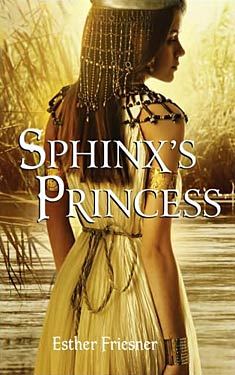
Sphinx's Princess Review (Esther Friesner)

Nefertiti is a dutiful, docile child, whose only interests, aside from the normal pursuits of a commoner's daughter, are music and dance. But an encounter with a scribe arouses secret lessons in the arts of reading and writing. As she enters her teen years, her growing beauty and her developing singing and dancing skills attract attention near and far. And when her aunt, Queen Tiye, summons Nefertiti's family, her life takes an unexpected turn. The strong-willed queen plans to use Nefertiti as a pawn in her desire for power. Even though she must obey the queen and live in the royal palace at Thebes, Nefertiti's spirit and mind will not rest. She continues to challenge herself, learning how to drive a chariot and hunt with a bow. With control of a kingdom at stake and threats at every turn, Nefertiti is forced to make choices and stand up for her beliefs in ways she never imagined.

I absolutely love stories about Ancient Egypt. At the age of seven, I gobbled up every book the local library afforded on Egyptian history. I became an expert on the Egyptian mummification process at ten years of age - that is still an accomplishment that I am especially proud of, though I confess that I am a tad bit rusty on the process now; it's been years since I have reviewed. When I went to the Field Museum in Chicago many years back, I only cared about the Egyptian display and practically went bonkers when my friend's mom surprised us with tickets to the King Tut exhibit that was visiting then. I cannot describe the untold joy I had rushing from one display case to the other, babbling on and on about the artifact therein and the theories surrounding this city and that pharaoh. I had employees asking me if I would care to come work there someday (my reply was a yearning yes, but sadly I don't think I could live in Chicago even for my beloved mummies). I am not entirely certain why Ancient Egypt held such allurement for me, but I was fascinated by them even more than the Romans - which is saying a lot for me. I wanted to be a professional Egyptologist, until I found out that being one mostly meant teaching at a university, rather than gallivanting off to Egypt to visit the pyramids and Giza Plateau. I ought to have been born in a year that would have permitted me to be in my early 20s when King Tut was discovered.

That said, let me now review this book. Nefertiti is one of the royal Egyptian figures that I used to read about the most, but I have regrettably forgotten most of what I read about her over the years. Nevertheless, I found Esther Friesner's take on how Nefertiti came to power fairly compelling. Her writing style captured the richness of Egypt in a way that I have not encountered in fiction for a while. I cared for Nefertiti, her little slave girl Berett, and Henenu - who was my favorite. At times, I even found myself caring for the minor characters just as much as for the major - sometimes even more so. What an accomplishment when an author can do that!!

The story itself is intriguing. At first, I found that to get to the actual storyline took a little while, and I was slightly bored in the beginning. I wouldn't ask nor advise Esther Friesner to cut out these passages, because they were certainly important for laying out the groundwork for the story. I imagine that when I go back to read Sphinx's Princess again, I won't find the passages so boring. Sometimes it's just the mood I am in.

I especially liked how Esther Friesner blended in Egyptian beliefs without giving the story a supernatural or fantastical feeling to it. The only thing that approaches fantasy is the dreams Nefertiti sometimes has. The way she included the Egyptian religion felt very authentic, unlike most authors, who somehow end up muddling the whole affair. I have always had trouble keeping the different Egyptian gods and goddesses straight in my head, but Ms. Friesner actually helped me remember who was who and what they were in control of. I am glad that I am not Catholic, for it must be just as confusing keeping all of the saints in order. ;)

I enjoyed Sphinx's Princess and look forward to reading the sequel - Sphinx's Queen. I also need to read Esther Friesner's two books about Helen of Troy - Nobody's Princess and Nobody's Prize. Unfortunately, the library doesn't have them . . .

Star Rating: 4/5 (really liked it)

Others in This Series:
1)Sphinx's Princess
2)Sphinx's Queen